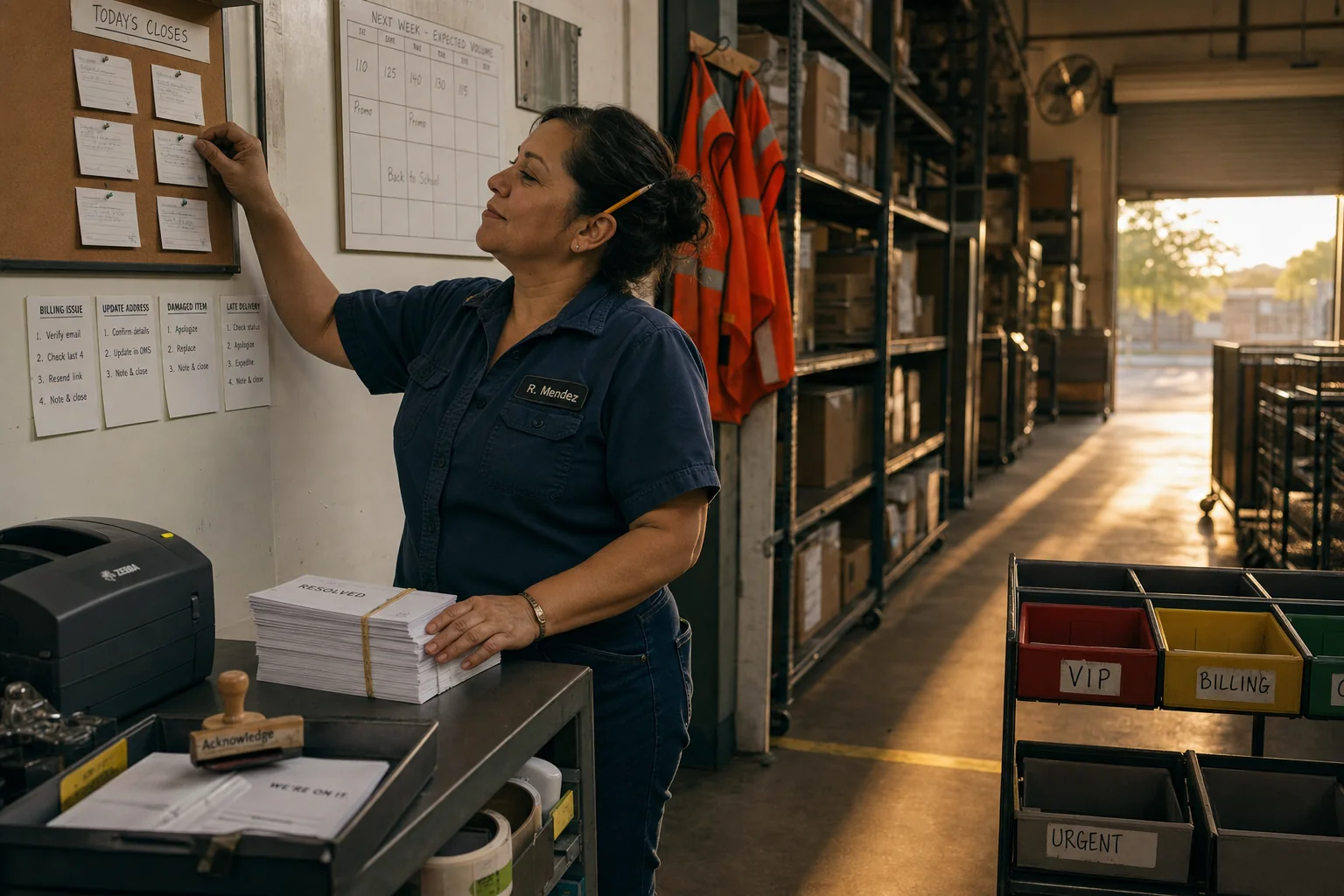
Your queue is full. Tickets keep coming in faster than your team can close them out. Every unanswered message feels like a small risk of churn, a small hit to your reputation, and a quiet drag on your team's morale.
A backlog is a logistics problem on the surface. Underneath, it's an operations problem, a staffing problem, and an emotional problem all at once. The longer it sits, the more all three compound.
This post covers what actually clears a backlog quickly and what keeps it from coming back.
What efficient support actually means
Efficient support is the ability to handle inquiries quickly, accurately, and consistently while keeping costs in check and customers satisfied. The goal isn't speed for its own sake. It's resolving real problems with as little customer effort as possible.
The levers that move the number:
- Streamlined processes
- Clear, useful communication
- Fast resolution paths for common issues
- Smart use of automation
- Personalized service at the moments that matter
- Proactive outreach when you can spot a problem before the customer does
A few stats worth knowing:
- 67% of customers will stop doing business with a company because of poor service
- 42% of consumers expect a response within 60 minutes
- Automating routine tasks can cut response times by up to 40%

The hidden cost of a backlog
The visible cost is the queue itself. The hidden cost is everything downstream.
Customers who feel ignored leave, and they tell people. Reviews drop. Word of mouth turns negative. Agents who work in a perpetual fire feel it. Morale slides, performance follows, attrition climbs. New hires inherit a mess and either burn out or leave.
A persistent backlog isn't just an operational problem. It's a slow-motion compounding loss across customer experience, brand, and team health.
Why backlogs happen
A few causes show up over and over:
- Understaffing. A team running at 100% capacity can't absorb any spike. The first surge tips them into backlog mode and they never catch up.
- Inefficient processes. Tickets stuck waiting for the right person, or stuck in handoffs between systems that don't talk.
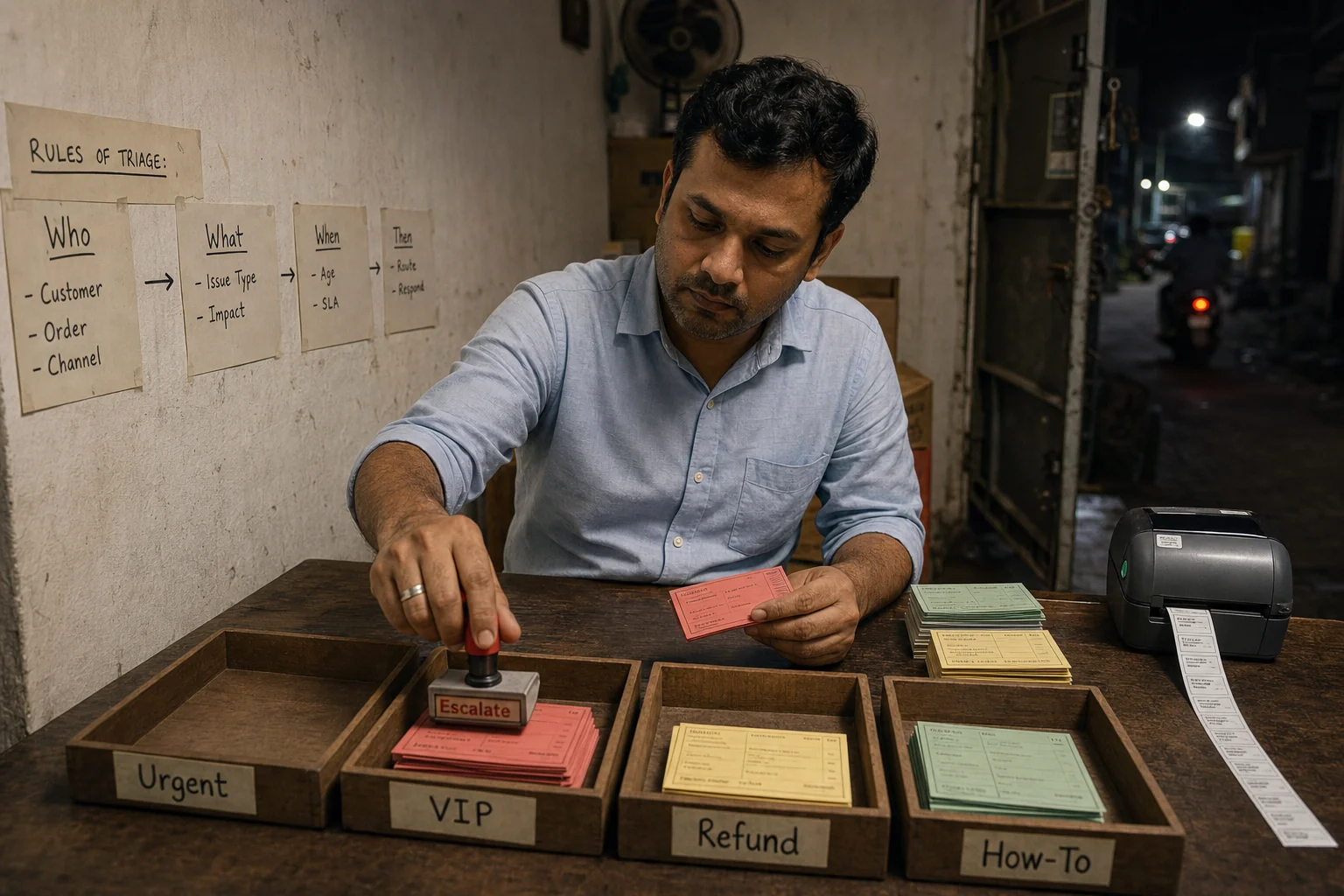
- No prioritization. Without a clear rule for what gets answered first, urgent tickets sit while easy ones get closed.
- Wrong tools. Help desks that don't fit the workflow, no automation on the routine stuff, agents copy-pasting between tabs.
These rarely show up in isolation. They feed each other. Solving any one in isolation usually doesn't move the number.
How we clear backlogs
1. Rapid response teams
Throwing extra people at a backlog only works if those people know what they're doing. We deploy experienced specialists who can analyze a queue, triage the urgent from the routine, and close tickets at speed without sacrificing quality.
The job isn't just answering questions. It's reorganizing the support flow so the next 100 tickets don't end up in the same place.
2. Strategic prioritization
Not every ticket carries the same weight. A frustrated VIP customer with a billing issue has to come ahead of a low-stakes feature question, regardless of order received.
We work with you to define the prioritization rules: who gets answered first, what counts as urgent, when an issue gets escalated. Then we run the queue against those rules so the most important customers get the most attention.
3. Automation where it earns its keep
Routing, categorization, common FAQ responses, and acknowledgment messages can all be automated without losing quality. Done well, automation handles the predictable so your agents can focus on the cases that actually need them.
We integrate automation alongside the human team, not instead of it. The combination clears the queue faster than either approach alone.
Building a system that stays clear
Clearing the backlog once is the easy part. Keeping it clear is the real work. A few things we put in place with every client:
- Scalable staffing. Forecasting volume so the team is sized right for what's coming, not what just happened.
- Process optimization. Reducing the steps it takes to resolve common issues so each ticket eats less time.
- Continuous monitoring. Real-time visibility into queue health so a backlog gets caught early, not after it has grown.
The goal isn't a clean queue once. It's a system that produces a clean queue as a byproduct of how it operates.
Ready to talk?
If your team is buried under a queue and you want experienced specialists who can dig you out and keep you out, let's talk.
30 minutes. No commitment. No credit card. You'll talk directly with our founding team.