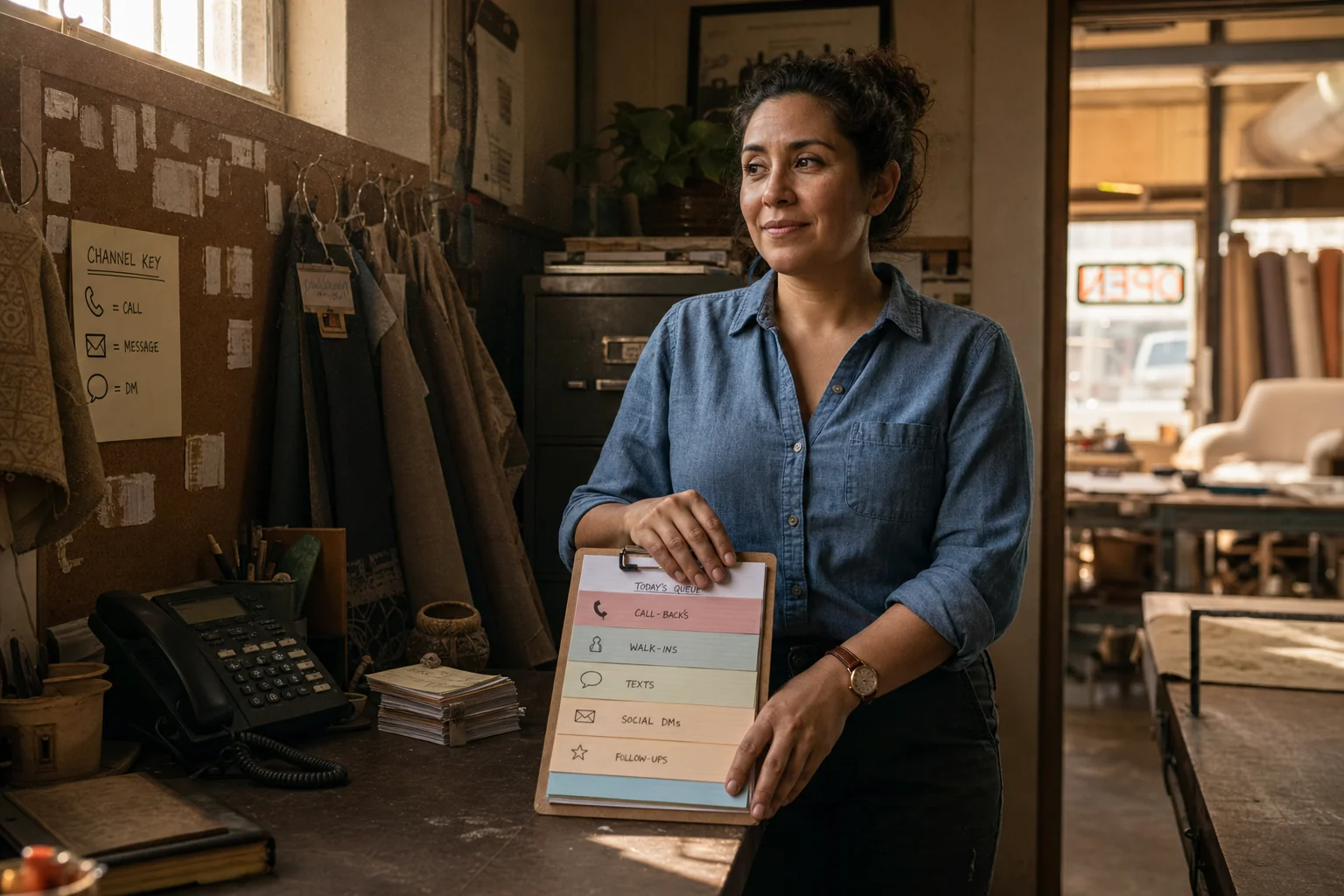
Customers reach out wherever they happen to be: email, chat, social, phone, SMS, in-app messages. Your team is expected to catch every one of them, fast, with the same quality of response. The volume is one challenge. The fragmentation is the bigger one.
Without the right system, multichannel support turns into a frantic context-switch all day. Agents jump between platforms, miss messages, lose track of conversations, and burn out. Customers feel the inconsistency and start trusting the brand less.
This post covers what good multichannel support actually looks like and how to run it without losing your team.
What multichannel support actually is
Multichannel support means giving customers more than one way to reach you. The common channels:
- Live chat
- Social media (DMs, mentions, replies)
- Messaging apps (WhatsApp, SMS, in-app)
- Phone
- Self-service tools like knowledge bases and ticket systems
The benefits are clear:
- Higher satisfaction. Customers use the channel they prefer.
- Faster resolution. More options means less waiting on a single overloaded queue.
- Flexibility. Customers move between channels as their context changes.
The catch: multichannel doesn't automatically mean omnichannel. In a true multichannel-only setup, the channels operate independently. Customer data doesn't always sync. A customer who emails on Monday and chats on Tuesday may have to repeat their issue from scratch.
That gap is where most multichannel implementations break down.
Why "be everywhere" fails when you do it wrong
The instinct is to add channels to keep up with customer expectations. The execution problem: every channel adds load, and load without infrastructure adds chaos.
What that looks like in practice:
- Agents toggling between five tools to handle one customer's issue
- Messages slipping between platforms, with nobody clearly owning the response
- Customers repeating themselves every time they switch channels
- Response time creeping up across every channel as the team gets stretched
- Agents burning out because the work is exhausting in a way that headcount alone can't fix
Adding a channel without adding the systems to manage it well doesn't expand your support. It dilutes it.
What turning chaos into control actually requires
A multichannel operation that works has three layers:
1. A unified view
Every channel feeds into one place. Agents see the customer's full history regardless of where the current message came from. Email, chat, social, phone, SMS, all visible in one workflow.
This isn't a nice-to-have. It's the foundation. Without it, agents are doing manual integration work all day instead of solving customer problems.
2. Clear ownership
Every conversation has a primary owner. Not a chat queue everyone watches and nobody picks up. A real person responsible for the customer's outcome, regardless of which channel the conversation moves to.
3. Consistent voice
The brand sounds the same on every channel. The same tone, the same standards, the same level of care. Customers shouldn't get a different experience depending on whether they emailed or DMed.
How we run multichannel support
One dashboard, all channels
Our team works in a unified workflow that aggregates every channel into one view. Email, chat, social, phone, all together. Context follows the customer regardless of where the conversation started or where it moves.
This single change tends to be the highest-leverage shift companies make when they bring us in. Not because the tooling is exotic, but because it removes the daily tax of context-switching that was eating your team's time.
Specialists who work across platforms
Each channel has its own conventions. Email is structured. Chat is fast. Social is public. Phone is real-time. Our agents are trained to operate across all of them with the same quality, adapted to the format.
We function as an extension of your team, not a parallel one. The voice, the policies, the standards, all match what your in-house team would deliver.
Meet customers where they are
Some customers love chat. Others prefer email. A small but vocal segment still wants the phone. The right answer is to support them all well, not to push customers onto your preferred channel.
Multichannel support works when it's about the customer's preference, not your operational convenience.
The long-term impact
Done well, multichannel support stops being an operational burden and becomes a real advantage:
- Higher CSAT because customers get help on the channel they want
- Faster resolution because volume distributes across multiple paths
- Better team health because agents aren't drowning in context-switches
- Stronger brand consistency across every customer touchpoint
- More time for strategy because support stops being a daily fire
The companies that handle this well are noticeably ahead of competitors who haven't figured it out yet. The gap widens over time.
Ready to talk?
If your team is buried under the daily chaos of managing multiple channels, we can fix that. Let's talk.
30 minutes. No commitment. No credit card. You'll talk directly with our founding team.